
HOW IT WORKS
Egg donation is a complex process that requires a significant amount of time and dedication.
We value education and believe it’s imperative that you understand all aspects of the process, including the difference between choosing “fresh” eggs versus “frozen” eggs, so you can make an informed decision and determine which is the right path for you.
In this video, our President & CEO, Katy, answers the most common questions regarding fresh and frozen donor programs.
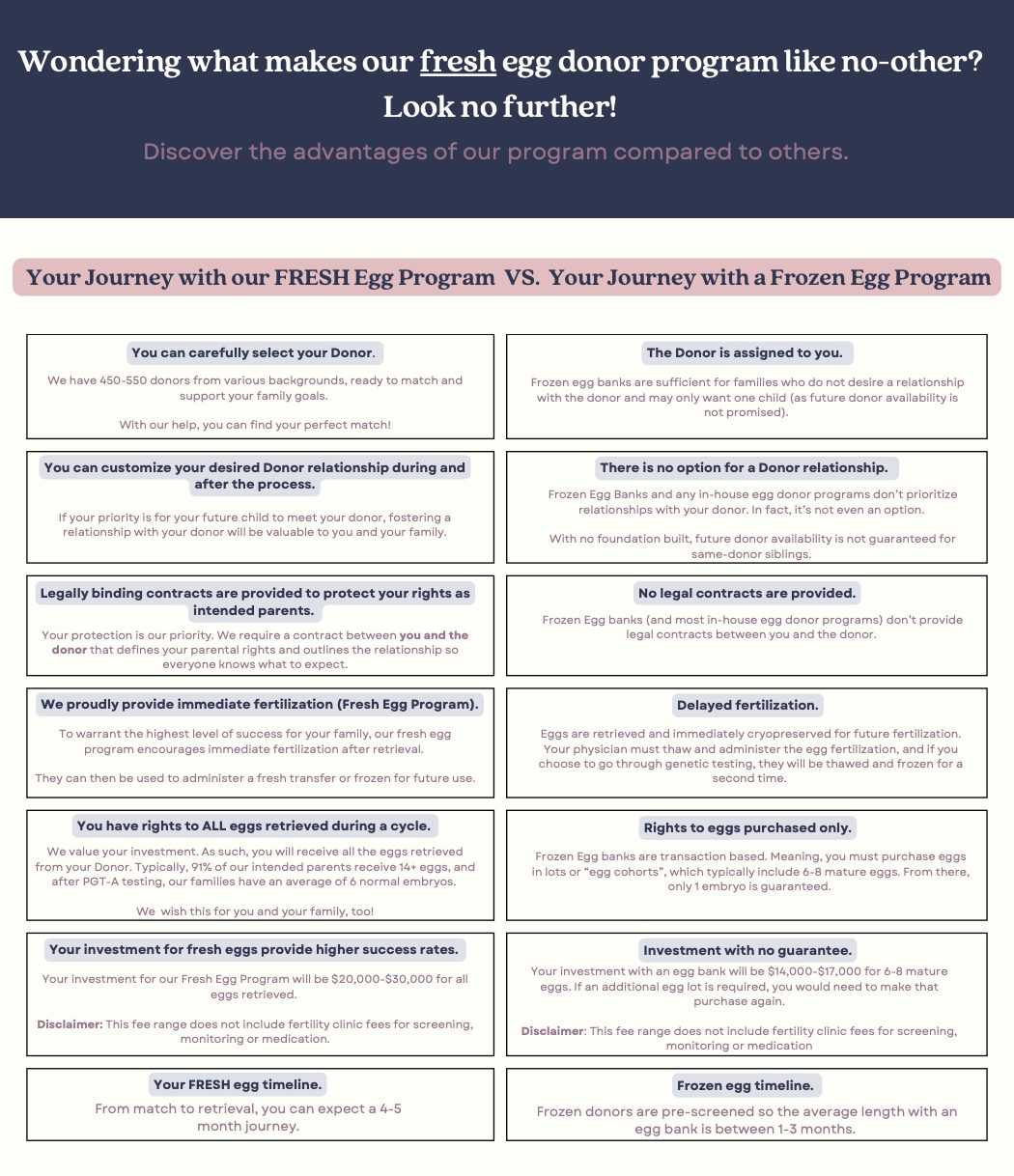
Intended Parents (IPs) typically end up with an average of six normal PGT-A tested embryos when completing a fresh egg donation cycle.
IPs always get to keep all of the eggs retrieved from their donor’s egg retrieval procedure. This may result in multiple embryos, with any remaining embryos available to be frozen for future family-building.
As IPs become more educated on what is in the the best interests of donor-conceived people (their future children), many are realizing the importance of ensuring they have a way to contact the donor in the future.
When working with an agency, IPs will have a direct legal agreement with their donor, which establishes parental rights, gives IPs the ability to determine what happens to any remaining, unused embryos and defines the guidelines for future contact and communication, including the donor keeping her information current on the Donor Sibling Registry.
The U.S. Donor Conceived Council, an advocacy organization focused on raising awareness about the needs, interests and challenges of donor-conceived people, recommends that no more than 10 families world-wide should be able to use gametes from a single donor. Because our donors have a maximum of six donation cycles and the Intended Parents receive all the eggs from a donor’s cycle, this means that no more than six families in our program can share the same donor. The same cannot be said for clinics and agencies that offer shared programs or frozen egg banks where the eggs from a single cycle are split into cohorts and can be used by multiple IPs.
In short, IPs typically end up with an average of six normal PGT-A tested embryos when completing a fresh egg donation cycle with Egg Donor & Surrogate Solutions. Intended Parents also always get to keep all of the eggs retrieved from their donor’s egg retrieval procedure. Learn more below.
When using an egg bank, the eggs from a donor’s cycle are split into “lots” or “cohorts” that can be used by multiple IPs. Typically, IPs purchase a cohort of six to eight frozen eggs, which must be thawed before they can be fertilized with the intended father’s or a donor’s sperm to create embryos. Many frozen egg banks will guarantee one viable embryo that can be transferred to the womb of the intended mother or a gestational surrogate who will carry the baby for the IPs. However, if the first transfer does not work or the pregnancy ends in a miscarriage, the IPs may not have additional embryos they can use to try again.
With a fresh cycle, some agencies and clinics offer a shared program where the eggs from a donor’s cycle are shared between two sets of IPs. At our agency, we exclusively facilitate fresh donor cycles, and IPs receive all of the eggs from their chosen donor’s cycle. This means that IPs have a greater chance of ending up with multiple embryos, allowing them to do a fresh embryo transfer, if they choose, then freeze the remaining embryos for future family building.
The success rates for embryo transfers and live births are higher with fresh eggs than frozen. With a fresh cycle, the average success rate for a positive pregnancy is 53% to 57% versus a national average of 35% to 50% with frozen eggs. The live birth rate using fresh eggs is 49.2% versus 43.1%.
We looked at the data from 148 of the egg donation cycles over the past two years (due to intended parent preferences, we don’t always receive the data for all cycles.) As per the guidelines recommended by the American Society for Reproductive Medicine, egg donors in our program can donate up to six times. Therefore, the donors who completed multiple cycles are represented more than once in the 148 total cycles. The 148 cycles were completed with 47 clinics across the US, so the data encompasses different medication protocols and varying degrees of experience.
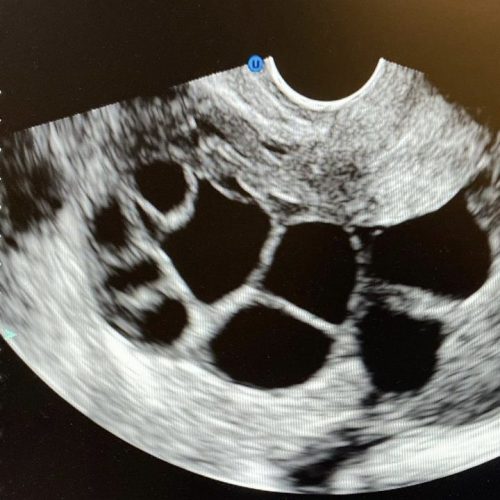
From the 148 donor cycles, 91% of Intended Parents had 14 or more eggs retrieved, and an average of 62% of the eggs were successfully fertilized. When looking at the final number of embryos, IPs ended up with an average of six normal embryos (determined to be genetically normal through preimplantation genetic diagnosis, also known as PGT-A testing).
When choosing a donor, the question of a proven donor versus a first-time donor is an important consideration for some IPs. The first-time donors in our program had an average of 23 eggs retrieved and an average of six normal embryos, indicating that the comprehensive screening process conducted by the IPs’ fertility clinic is a good predictor of how well a donor will perform in her first cycle. All donors were first-time donors at one point, and we highly encourage IPs to consider first-time donors who meet their criteria.
Our agency requires a direct agreement between IPs and donors to protect the legal interests and rights of both parties. Our team will guide you through the legal process and ensure that both you and your donor have legal representation from an attorney who specializes in third-party reproduction. The agreement will establish your parental rights and terminate any rights or responsibilities the donor has to the children created through egg donation. It will also define the guidelines for future contact and communication, such the donor keeping her contact information current with the Donor Sibling Registry.
With a frozen egg bank, egg donors are almost always exclusively anonymous, so you will not have the option to have a customized legal agreement with your chosen donor. You will sign consent forms with the egg bank, but it does not carry the same weight as a legal agreement between you and your donor.
At EDS, egg donors are allowed to complete a maximum of six cycles, the standard recommended by the ASRM, and the IPs receive all the eggs from a single cycle. This means that no more than six families will receive eggs from the same donor. With frozen banks, the eggs from a single cycle may be split between multiple IPs, increasing the number of families with the same donor, and thereby the number of potential donor siblings, exponentially.
When working with ED & SS, you have the ability to customize your desired relationship with your donor both now and in the future. This can include an in-person meeting or video conference with your donor (facilitated by a member of our team), options for ongoing or future contact, and the option for your future children to meet the donor one day if that is their choice.
“When you go to a frozen egg bank, you lose the ability to have direct communication with your donor and control over things that may be important to you,” says Lauren Gaydos Duffer, a Dallas-based attorney who has been partnering with EDS for nearly 10 years to draft legal agreements for IPs and egg donors. “The protection an agency gives you cannot be replaced.”
The timing for a fresh cycle is slightly longer than when using frozen eggs because medical screening and legal contracts must be completed before the donor begins the cycle. From match to retrieval, the average length of time for a fresh cycle is about three to four months. Donors at frozen egg banks have been prescreened, so the timing is shorter at about one to three months on average.
The typical cost for a fresh cycle at ED & SS is $17,000 to $27,000 with most families spending an average of $20,000 versus approximately $14,000 to $17,000 for a “cohort” of six to eight frozen eggs. These fees do not include costs associated with the fertility clinic for the donor’s medication and monitoring, egg retrieval and fertilization, and embryo transfer to the intended mother or a gestational surrogate.

Surrogacy is more than medical. It’s deeply spiritual. And discerning a call to carry (or to let someone carry for you) isn’t always easy. Whether you’re pursuing surrogacy, preparing to carry for someone else, or just navigating unfamiliar terrain, you’re not alone. Called to Carry is a 14-day devotional for women of faith walking through the sacred, complex, and often hidden journey of surrogacy. Get your free copy today.